Announcing Native BM25 Ranking in AlloyDB and Cloud SQL
Vector search is a critical component of generative AI, retrieval-augmented generation (RAG), and data agent
As enterprises invest in generative AI, tech leaders keep seeing the same pattern: Developers test AI tools for a week, hit setup problems, and then drift back to the backlog. Nothing ships.
The real gap is enablement. In this landmark Harvard Business Review article, Josh Bersin and Marc Zao-Sanders noted that knowledge workers carve out just five minutes a day for formal learning. Most enterprise training programs still lean on week-long classroom bootcamps, multi-week certification tracks, and passive video lectures, none of which fit into the time developers actually have.
With the Build with Gemini event series underway, Google Cloud Consulting is seeing more leaders rethink AI enablement by building quick, daily practice into their teams’ routines. In this post, we’ll walk through a four-pillar approach and the lessons from our global developer challenges to share what micro-habit upskilling looks like.
|
The traditional method… |
…now becomes |
|---|---|
|
Multi-week, semi-annual classroom bootcamps |
Five-minute hands-on exercises |
|
Local workstation configuration and credential setup |
Pre-configured browser-based sandboxes |
|
Mandatory attendance and compliance checks |
Daily streaks, badges, and team challenges |
|
Multiple-choice quiz completion |
Deployable agent tools and reusable code |
Rolling out a model like this comes down to keeping each task small and manageable. Here’s how we structure that work across engineering teams:
Make micro-learning a habit. Offer short objectives that each cover one skill, like connecting a model to a database schema or validating structured output, in place of full-day training blocks.
Give teams browser-based sandboxes. Setup is where most training stalls, so remove it. With a pre-configured, managed cloud environment, developers open a tab and are writing code within minutes, with no credentials to request and nothing to install or maintain on their own machines.
Build in daily streaks. Milestones, shared wins, and teammates comparing solutions turn practice into a normal part of the workday.
End every session with something that runs. Each exercise should leave behind a working component, and over time those components accumulate into a shared library of code and prompts the whole team can pull from.
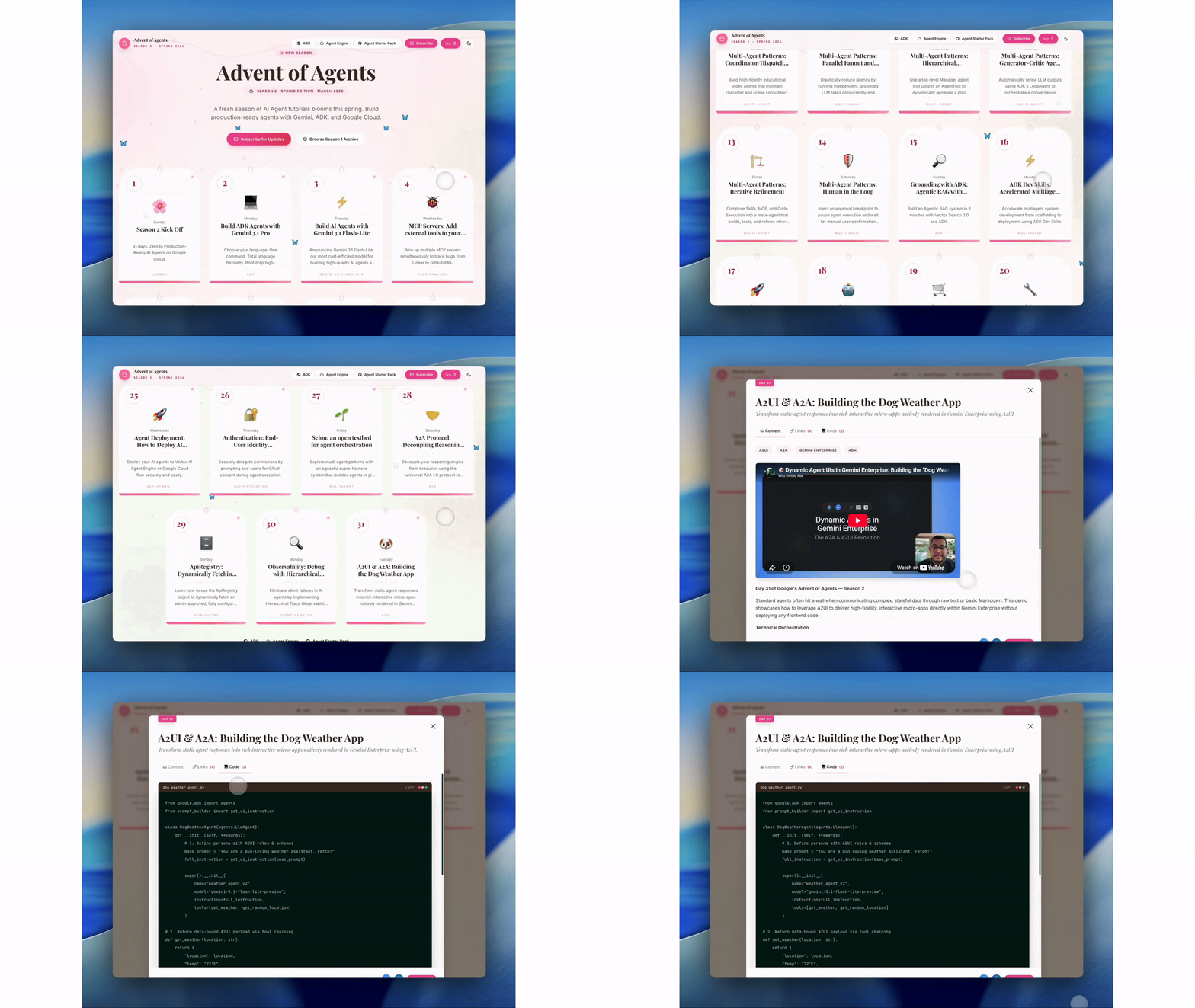
When Google Cloud launched Advent of Agents, a daily agent-building program for developers, we wanted to test one question: what happens when you remove setup and scheduling from technical enablement?
Each day, developers got one short, real-world agent exercise they could run right in the browser, with no half-day to block off and no setup guide to read first.
150,000+ developers participated across global teams.
859,000+ hands-on code executions in browser-based environments.
31% of participants returned daily, more than triple the 10% industry average for self-paced tech, and significantly exceeding the standard 5%–15% MOOC benchmark
32,000+ participants built working agent components.
The above data was accessed via Advent of Agents Google Analytics metrics.
Keeping each exercise under five minutes and pre-wiring the sandboxes removed the two things that usually stall workplace training: setup time and scheduling. The numbers suggest developers will make time to learn when the exercise fits into the day they already have.

AI enablement doesn’t have to pause your sprints. It takes a consistent habit of practice and the tools that let teams build alongside their regular work.
Experience live building. Bring your engineering teams to a Build with Gemini workshop. The events are complimentary and run different tracks according to technical depth, from no-code for business leaders to code-first for developers, with live hands-on labs supported by Google Cloud experts.
Build skills with GEAR. Enroll your technical and business teams in the Gemini Enterprise Agent Ready (GEAR) program. Membership is free and includes monthly learning credits on Google Skills, hands-on labs, and skill badges, with learning paths for developers, line-of-business leaders, and IT decision-makers.
Developing AI skills starts with a change in routine. Short, daily, hands-on exercises let developers learn by doing, and the working code they produce along the way becomes the team’s starting library for production work.
Give your developers a few minutes a day and a sandbox that’s ready when they are. Start with one exercise this week and see how small, daily habits can build AI capability across your organization.
Join a Build with Gemini workshop: Sign up today for interactive labs and practical training for developing secure AI agents.
Start building with GEAR: Join GEAR and discover how to deploy enterprise-grade agents with hands-on learning and guidance.
Explore free courses on Google Skills: Build in-demand AI expertise at your own pace.